Apogee
- Information for patients (Pelvic Health Care)
Prepared by:
Prof. Ajay Rane, Consultant Urogynaecologist MBBS MD MRCOG FRCS FRANZCOG CU
Audrey Corstiaans CNC,Urogynaecology
Updated July 2007
What is an APOGEE?
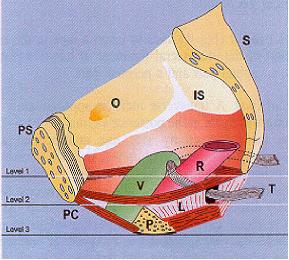
The Apogee is a minimally invasive specialised sling procedure used to fix the top of the vagina into its correct anatomical position. The sling used in this operation is made up of monofilament polypropylene, which has been shown to be very, well tolerated by the body. This is used to provide additional firm and long lasting support. The sling is attached to the top of the vagina and supporting tissues of the pelvic floor. |
|
What is involved?
The procedure is performed usually under a light general anaesthesia. There is an incision into the back (posterior) wall of the vagina and 2 small incisions by the side of the anus. The defect in the vaginal support is identified and the mesh is sutured to healthy vaginal support tissues to create a special bridge to fix the vagina/prolapse into its correct anatomical position.
Complications
There is a small chance of mesh rejection after the operation. This is usually in the form of a small piece of mesh coming out of the wound-requiring trimming, which is usually done in the outpatient clinic. In very exceptional circumstances the mesh has to be removed if it is completely rejected. Other complications that are extremely rare may include bleeding, infection or bowel perforation. Anaesthesia itself is never without risks and the risks are greater for women, who smoke and are overweight.
Hospitalisation This procedure usually involves an overnight stay in hospital. Remember to bring sanitary napkins into hospital, as you will have vaginal bleeding post operatively.
Results
The success rate of this procedure is 90% at 1 year and continues to be evaluated. It is certainly similar to conventional major surgery. Weight loss if overweight, reducing or quitting smoking, improving Pelvic Muscle tone by doing Pelvic Muscle exercises and continuing 40 per day even after surgery will help to ensure the operation is a success.
Recovery
When you go home you must not lift heavy objects or do strenuous work for a period of 6 weeks. Intercourse must also be abstained from for this period of time. 5 days of antibiotics have to be taken to prevent infection of the mesh.
Afterwards
You will be seen 10 to 12 weeks after the operation and if everything is well the success of your operation should be permanent.
5 days of antibiotics have to be taken to prevent infection of the mesh. We strongly recommend taking anti-inflammatory medication (Nurofen) for 1 week, twice a day with food post operatively, unless you have a medical reason for not doing so or are already on anti-inflammatory medication.
Post Operative Instructions
- You will have some vaginal discharge for 4 to 6 weeks. This should be light bleeding or spotting only and this may vary during that period of time as healing occurs and your stitches dissolve.
- You may feel the vagina to be lumpy or raised, this is vaginal tissue, NOT the return of your prolapse and should improve within 6 months.
-
We recommend you are not to self examine or self assess your operative site till you have been examined by the doctor post operatively.
Pain should be relieved with Panadol or Panadeine (remember if you take Panadeine, this increases the risk of constipation so ensure you have an adequate intake of fibre and fluids in your diet).
| Do not use tampons, pads are better |
|
| Do not drive an automatic car for |
1 week* |
| Do not drive a manual car for |
2 weeks* |
| Do not make a bed for |
2 weeks |
| Do not hang out washing for |
4 weeks |
| Do not use Vaginal Oestrogens for |
4 weeks |
| Do not mop or vacuum for |
6 weeks |
| Do not stretch upward for |
6 weeks |
| Do not lift anything over 4kg for |
6 weeks |
| Do not have sexual intercourse for |
6 weeks |
The first week is the most important, where one must rest.
*It is important to check with your insurance company, re driving your car as each company has different policies on driving and surgery.
The guidelines are minimum time before recommencing these activities.
- Remember to rest, if you are tired and uncomfortable you have been doing too much and need to slow down.
- Remember when emptying your bladder, sit on the toilet, feet flat and lean forwards.
- Drink 6 - 8 glasses of fluid per day; limit your caffeinated drinks to 3 per day.
- Ensure your fibre intake is 30 grams per day.
- If constipation is a problem, Lactulose, which you can buy from the chemist or another stool softener should be used.
Contact your G.P or local Hospital if you experience any of the following
- Pain that is not relieved by Panadol or Panadeine
- Burning or difficulty passing urine
- Increased vaginal bleeding or passing clots
- Smelly or offensive vaginal discharge
- You develop a temperature or become unwell.
Your doctor will be happy to discuss any concerns that you may have regarding this operation. |